
Gerontology is the study of the aged and aging. It includes the biological, psychological, and sociological components of becoming an older adult. Gerontologists study how and why the body and mind change as we grow past adulthood and how these changes affect older adults and society as a whole. Recognizing the problems that come with aging and approaching them through different angles is vital to improving the quality of life of the elderly. These approaches include biological, medical, psychological, social, and policy. Because aging is an inevitable part of human development, it is important to understand the processes that shape life after adulthood.
USC Leonard Davis School of Gerontology. (2025, May 2). What is Gerontology? - USC Leonard Davis School of Gerontology. https://gero.usc.edu/what-is-gerontology/
National Academies Press (US). (1987). Principles of gerontology. Aging in Today’s Environment - NCBI Bookshelf. https://www.ncbi.nlm.nih.gov/books/NBK218728/
Biological age refers to the age of the cells in your body. As we age, our cells, tissues, and organs are affected by the wear and tear we put our bodies through, and they age with us. Over time they deteriorate on a molecular level. The rate at which this event happens is different for everyone, hence why some age faster or slower than others. The molecular damage to our cells alters major systems in the body.
Immune System:
The immune system declines as we get older. It reacts slower, and vaccines have trouble working. The body's healing time increases. The immune system struggles to recognize and fix cell issues. These problems increase the older population's chances of getting sick and of developing cancer.
Integumentary System:
The skin loses melanocytes, the cells that give the skin color, as we age. The outermost layer of the skin thins as it loses its stretchiness and strength. A growing number of skin tags and other blemishes on the skin are common. Areas of the skin that have the highest level of exposure to the sun will exhibit these changes the most. Blood vessels on the second layer of the skin, the dermis, become weak, leading to bruising risk. The hypodermis, the innermost layer of skin consisting of fat, thins. This results in less protection against the cold.
Nervous System:
The brain, spinal cord, and nerves slowly degenerate when people are in old age. Nerves take longer to send information. Slower thinking and memory are common. Some may experience diminished feeling and reflexes. Harmful waste products like beta amyloid, the peptide that causes Alzheimer’s disease, can build up in the brain, leading to plaque on the brain. Serious loss of memory and dementia are abnormal in healthy aging. Slower memory retrieval, longer learning time, and shorter attention spans are normal.
Respiratory System
Shrinking of the bones can cause alterations in the shape of the ribcage. As you breathe in, the lungs expand; these alterations can make lung expansion difficult. The diaphragm, the muscle underneath the lungs that helps you breathe, becomes weaker, making it tougher to breathe in and out. Lung tissues begin struggling to maintain open airways, and the air sacs known as alveoli sag. Combined with the immune system issues, the elderly become at risk of lung infections like pneumonia and bronchitis. Irregular breathing patterns and shortness of breath are common as well.
Cardiovascular System:
The heart wall in the left ventricle of the heart becomes thicker, decreasing the amount of blood that chamber can hold. This makes the heart fill slower. The SA Node, the heart’s pacemaker, loses some cells, resulting in a slightly lower heart rate. The valves in the heart and arteries stiffen, which can make it more difficult for the heart to pump blood, increasing its workload. Baroreceptors, receptors that help the body maintain a stable blood pressure, become less sensitive. This can cause dizziness when changing position from sitting to standing due to a decrease in blood flow to the brain. Overall blood volume decreases, and red blood cell regeneration slows down. This puts the elderly at risk for diseases like angina, atherosclerosis, high blood pressure, etc.
Musculoskeletal System:
As people age, their bones shrink in size and density. This is especially true for women after menopause. The bones in the spine called vertebrae compress as we enter older adulthood, making people appear shorter. The muscles in the body lose strength and flexibility. The joints become more rigid and less flexible as well. This loss of bone mass makes the bones weaker, putting older people at risk of breaking bones and falling.
Urinary System:
The kidney tissue and nephrons decrease as we grow old. The blood vessels that connect to the kidneys harden, which slows down the kidney filtration system. The bladder loses its elasticity, lowering the amount of urine it can hold at once. Bladder muscles weaken pelvic floor muscles, making it harder to empty the bladder. Men tend to suffer from an enlarged prostate. This causes the older population to have difficulty ridding the bladder of its contents. It puts them at risk of urinary incontinence, urinary tract infections, and chronic kidney disease.
Reproductive System:
Older women have a change in hormone levels triggering menopause. The production of estrogen and progesterone comes to a halt. After a year without a menstrual period, menopause is considered complete. The ovaries stop releasing eggs, and the vaginal wall becomes dryer. This puts older women at risk of vaginal yeast infections. Older men go through andropause. Testosterone and testicular tissue decrease slowly. Tubes that hold sperm become less elastic, and the rate of sperm cell production reduces. 50% of men will experience benign prostatic hyperplasia, enlargement of the prostate gland. Medical issues like erectile dysfunction can pose a problem.
Backman, I. (2024). The biology of aging. Yale School of Medicine. https://medicine.yale.edu/news/yale-medicine-magazine/article/the-biology-of-aging/
Aging changes in organs, tissue and cells: MedlinePlus Medical Encyclopedia. (n.d.). https://medlineplus.gov/ency/article/004012.htm
Aging: What to expect. (n.d.). Mayo Clinic. https://www.mayoclinic.org/healthy-lifestyle/healthy-aging/in-depth/aging/art-20046070
Image © OpenStax, Anatomy and Physiology, CC BY 4.0.
Access for free at https://openstax.org/books/anatomy-and-physiology/pages/1-introduction
Erikson’s Final Stage: Integrity vs. Despair
Erick Erickson was a developmental psychologist and innovator on the view of the life span. His theory of development involves 8 stages over one’s lifetime. Erickson’s final stage of development, which occurs in late adulthood, is ego integrity versus despair. This stage involves reflecting on one’s life and deciding whether to accept the imperfections of it or live with regrets. Successfully resolving this stage leads to ego integrity, a sense of acceptance, meaning, and wisdom that allows individuals to face aging and death with peace. However, those who hold onto past mistakes or feel life has been wasted may experience despair, which can lead to hopelessness, dissatisfaction, and fear of death. Erikson emphasizes that most individuals experience a mixture of both integrity and despair, but healthy aging occurs when integrity outweighs despair, supporting emotional well-being in late life.
Role Transitions
As adults enter late adulthood, their roles and daily responsibilities often change in significant ways. Retirement is one of the most common transitions, and although it may bring freedom and more personal time, it can also lead to changes in one’s identity, routine, and social connections. Many older adults also experience a shift in family roles, like becoming grandparents, relying more on adult children, or coping with the loss of a partner or close friends. Finding healthy ways to adapt to these is important. Though the number of older adults living alone is growing, many move in with their adult children or into institutions. These changes can influence self-esteem, life satisfaction, and emotional well-being. Social engagement is especially important during this time. Maintaining relationships, participating in community activities like volunteering, or finding new roles can help older adults feel valued and purposeful. How one adjust to these transitions plays a major role in their psychological health and their overall experience of aging.
Psychology, S. (2025, October 15). Erikson's Stages of Development. Simply Psychology. https://www.simplypsychology.org/erik-erikson.html#Stage-8-Ego-Integrity-vs-Despair-65-Years
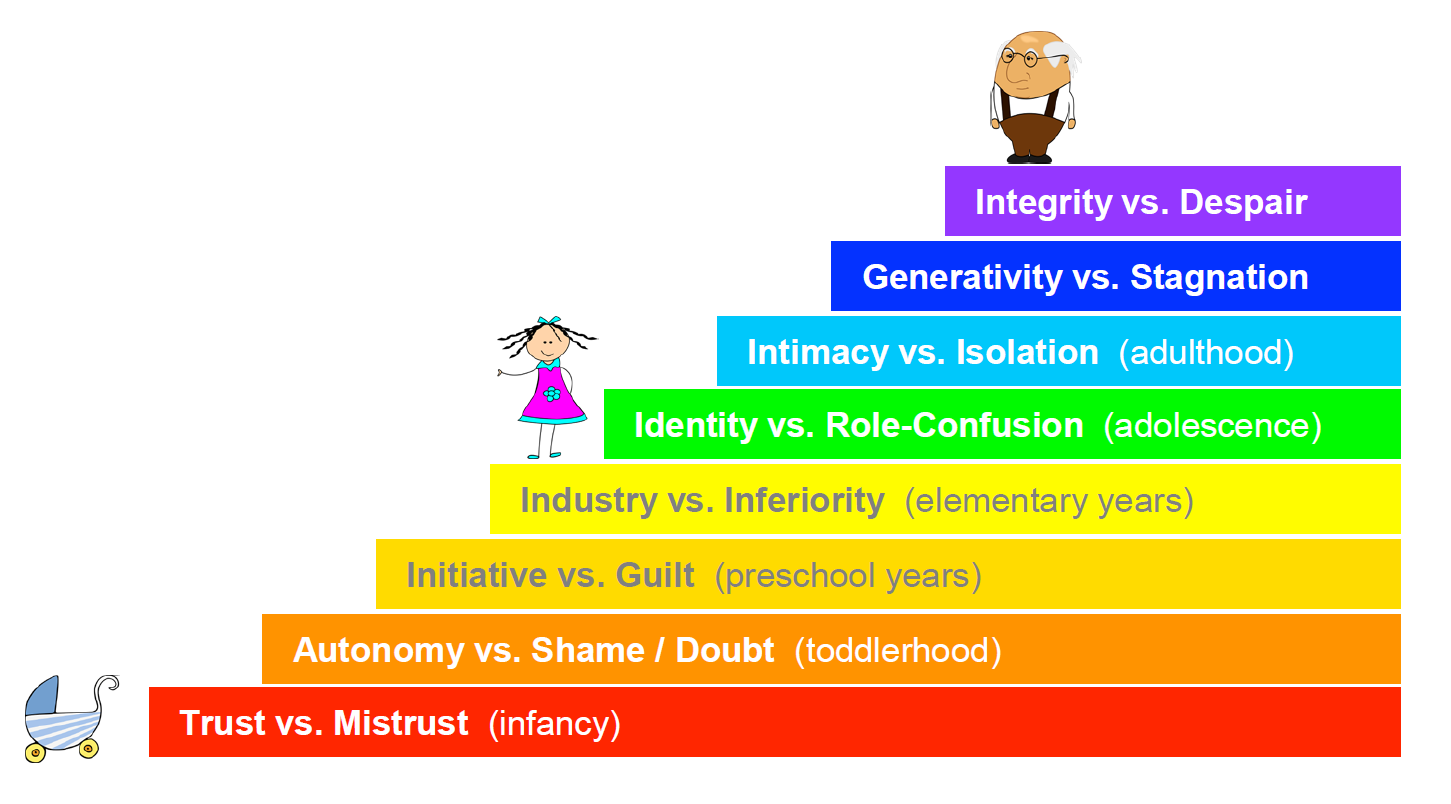
Image Source: Psychosocial theory © Deirdre Budzyna via ROTEL, licensed under CC BY-SA.
Source: https://rotel.pressbooks.pub/app/uploads/sites/12/2023/11/psychosocial-theory.png
Disengagement theory is one of the earliest theories in gerontology. It suggests withdrawing from social roles, responsibilities, and relationships is a natural and expected part of aging. According to this viewpoint, older adults begin to detach because they recognize the approach of death and experience declines in physical ability, while society simultaneously reduces the number of roles available to them. This was thought to be mutual withdrawal on both sides. However, there is little evidence to prove this theory to be true and its popularity has decreased overtime.
Activity theory argues the opposite of disengagement theory. It claims older adults age better when stay active, engage with community, and continue to identify with their roles. According to this perspective, maintaining interests, hobbies, friendships, and physical activity contributes to life satisfaction and mental well-being. Instead of withdrawing, older adults benefit from replacing lost roles like retiring and taking up volunteering as a substitute. This theory is mostly supported by research showing that social engagement and staying mentally and physically active improve overall wellbeing.
Continuity Theory proposes that older adults age best when they maintain consistency in behavior, personality, and lifestyle across the lifespan. Rather than withdrawing or taking on completely new roles, individuals cope with aging by adapting familiar patterns from earlier stages of life. Someone who has always enjoyed an active lifestyle, for example, will continue to enjoy an active lifestyle in late adulthood and vice versa for those who enjoy calm lifestyle. This theory acknowledges that while aging brings change, maintaining core habits and values helps older adults feel grounded and resilient.
E. Papalia, D., & Martorell, G. (2024). Experience Human Development (15th ed.). McGraw Hill LLC.
WIRED. (2023, November 13). How your body ages from head to toe | WIRED [Video]. YouTube. https://www.youtube.com/watch?v=mlFUJ-0Rb8Y
Sprouts. (2017, April 23). 8 Stages of Development by Erik Erikson [Video]. YouTube. https://www.youtube.com/watch?v=aYCBdZLCDBQ
For students, By students - Honors College HOP, Fall 2025 Tamara C.